A temperature monitoring system tracks fridge and cold room temperatures in real time and alerts you instantly. Learn how it works and how to choose one.
1. What Is a Temperature Monitoring System and How Does It Work?
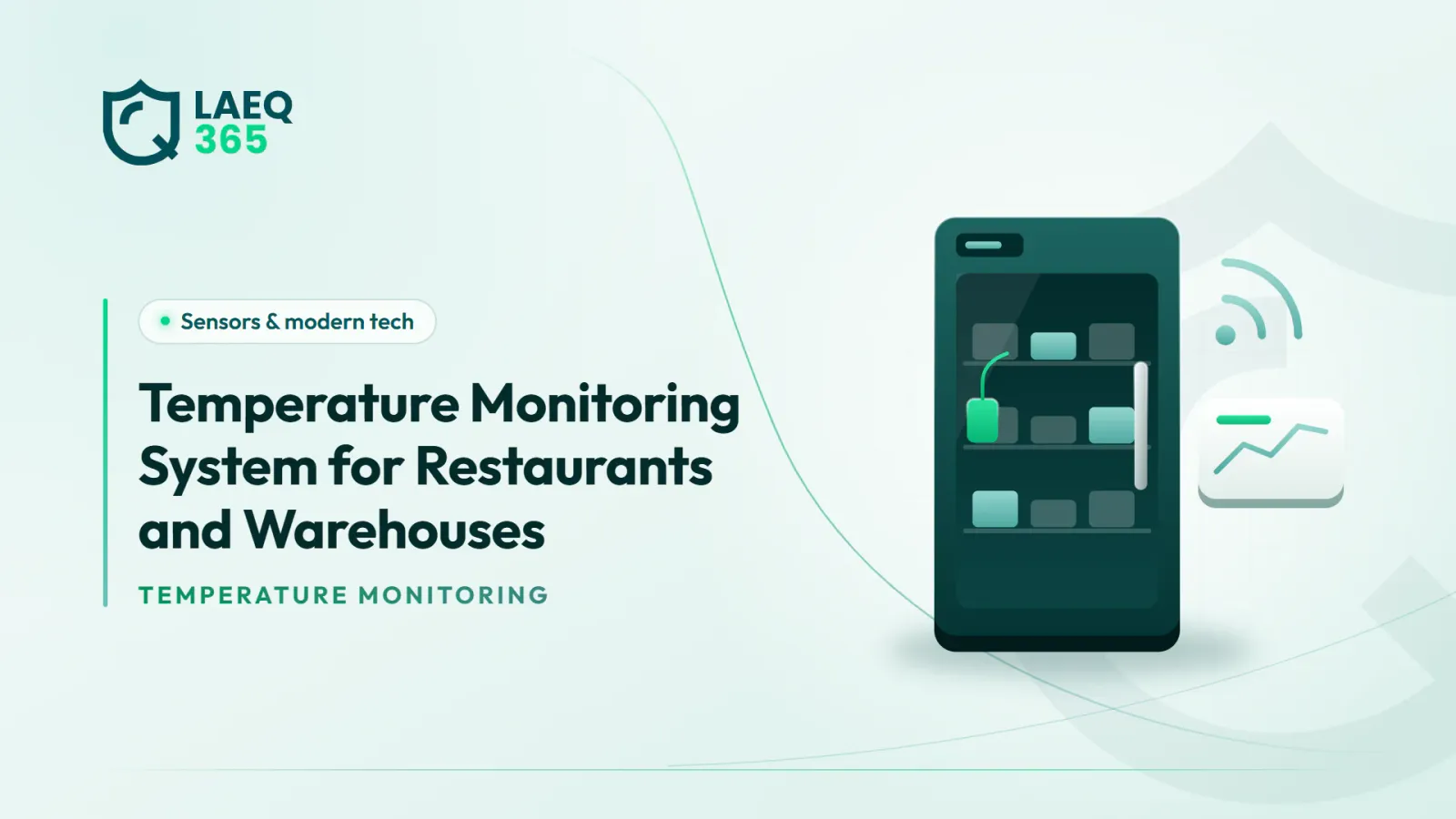
A temperature monitoring system is a set of wireless sensors installed inside fridges, freezers and cold rooms. They measure temperature around the clock and send the readings automatically to a dashboard you can open on your phone or computer. When a reading goes outside the limit you set, you get an instant alert instead of discovering the problem the next morning.
The idea is simple: instead of a staff member walking past the fridges two or three times a day to write a number in a paper log, the sensor reads the temperature every few minutes with no human involvement. The result is a continuous record with no gaps, and a clear view of what happens at night, over weekends and during peak hours.
The system usually works in three layers:
- Measurement: a sensor or probe inside the cooling unit captures the temperature, and sometimes humidity or door status.
- Transmission: a wireless gateway receives signals from nearby sensors and sends them over the internet.
- Display and alerts: a dashboard shows live readings and historical charts, and sends alerts to the people responsible.
This turns temperature control from a task that depends on memory and daily discipline into an automated process you can verify at any moment, from anywhere, even if you run several branches in different cities.
2. What Are the Components of a Wireless Temperature Monitoring System?
Before comparing offers, it helps to understand what you are actually paying for. The quality of a system is not determined by the sensor alone, but by how well its components work together and how easy they are to manage day to day.
- Temperature sensors: some are mounted directly inside the fridge, while others come with a thin wired probe that goes into the freezer while the sensor body stays outside to protect the battery from extreme cold.
- Humidity sensors: useful in dry warehouses and in storage rooms for dates, spices and flour.
- Door sensors: record every opening and closing and reveal doors that are left ajar.
- Wireless gateway: the link between the sensors and the internet; its location determines signal coverage inside the kitchen or warehouse.
- Dashboard: shows every site and every cooling unit with its current reading and history, and lets you review records for any period.
- Alert system: defines who is notified, and when, if limits are exceeded.
Always ask how installation is done and who handles it, how long the battery lasts and how it is replaced, and how the sensor behaves during a temporary internet outage: does it store the readings and send them later, or are they lost? These small details are what separate a system that runs reliably for years from one that becomes a burden after a few months.
3. Why Do Food Businesses in Saudi Arabia Need Real-Time Temperature Monitoring?
The operating environment in the Kingdom puts particular pressure on refrigeration equipment. In the summer months, kitchens and compressor rooms get hotter, fridges run for longer to cope with the load, and any weakness in a compressor or damage to a door gasket shows its effect faster than usual.
Beyond the heat, there are everyday factors that make manual monitoring alone insufficient:
- Short power cuts: they can happen at night and come back before the team arrives, without anyone noticing.
- Frequent door opening: especially during peak hours and while receiving deliveries.
- Shift work: which means responsibility for recording temperatures gets lost between staff members.
- Multiple branches: it is hard for an operations manager to know the state of the fridges in every branch without a site visit.
Regulators, led by the Saudi Food and Drug Authority (SFDA) and the municipalities and Amanahs, also treat temperature control as one of the most important elements of food safety. A continuous digital record makes it easier to prove that products were kept in the right conditions, and helps you catch a fault before it turns into spoiled stock or a finding during an inspection visit.
Real-time monitoring does not replace your team, but it gives them an eye that keeps watching when they are not there.
4. Which Areas Should You Monitor First in a Restaurant or Warehouse?
You do not need to cover every corner from day one. It is better to start with the highest-risk, highest-value units and then expand gradually once the team is used to the system.
Order your priorities like this:
- Main cold rooms and walk-in freezers: they hold the largest share of your stock value, and any failure means a big loss all at once.
- Fridges for meat, poultry, fish and dairy: they are the most sensitive to rising temperatures.
- Under-counter prep fridges: opened dozens of times per shift, so their temperature fluctuates a lot.
- Display fridges in supermarkets and cafés: exposed to lighting, outside heat and customer traffic.
- Dry warehouses: where humidity and general temperature are the most important indicators.
Once you have the list, draw a simple site plan showing where each cooling unit is and the distances between them. This helps estimate how many wireless gateways you need and where to put them. For precise guidance on sensor position inside each unit, see our guide to temperature sensor calibration and placement.
In small restaurants a few monitoring points may be enough, while central kitchens and warehouses need wider coverage built up in carefully planned stages.
5. How to Choose the Right Temperature Monitoring System for Your Business
Offers look similar on the surface, but the differences show up after go-live. Use the following criteria as a checklist when comparing:
- Reading accuracy and stability: ask about the sensor's stated accuracy and whether it can be verified against a reference thermometer.
- Reading frequency: the shorter the interval between readings, the faster a problem is detected.
- Alert flexibility: can you set a different limit for each unit? Set a delay before the alert fires? Escalate to someone else if nobody responds?
- Dashboard usability: can a shift supervisor understand it without lengthy training? Is it available in Arabic?
- Records and reports: can you view history over a long period and refer back to it during an inspection or when reviewing a complaint?
- Local installation and support: having a team that installs and follows up inside the Kingdom saves a lot of time.
- Link to operations: ideally an alert is tied to a corrective action and a task assigned to an employee, rather than remaining an isolated message.
Ask for a trial on a limited number of units before rolling out, and during it track the number of unnecessary alerts and how quickly the team responds. A good system is the one your team actually uses every day, not the one with the longest feature list on paper.
6. How Does a Monitoring System Help Reduce Food Waste?
The real return on temperature monitoring does not come from the device itself, but from the losses it prevents. A single freezer failure that goes unnoticed overnight can mean throwing away an entire stock, plus the team's time spent on stock counts, cleaning and reordering.
The system helps reduce waste in several ways:
- Early detection: the alert arrives as the temperature starts to rise, leaving time to move products to another unit.
- Data-driven decisions: instead of discarding everything as a precaution, the record shows when the rise started and how high it went, so you can decide based on food safety guidance.
- Preventive maintenance: charts reveal the unit that takes longer to return to its temperature after each opening, an early sign of a weakening compressor or a damaged door gasket.
- Better habits: when the team sees the effect of leaving a door open on the chart, behaviour gradually changes.
To estimate the return for your business, add up the value of stock lost to refrigeration failures over the past year, the cost of emergency maintenance, and the time your team spends on manual logging, then compare that with the subscription cost on our pricing page. The numbers vary from one business to another, so rely on your own data rather than general averages.
7. What Are the Steps to Implement a Temperature Monitoring System?
A successful rollout depends as much on planning as on technology. Follow these steps for a smooth launch without disrupting daily work:
- List your units: write down every fridge, freezer, cold room and warehouse, along with the type of products stored in each.
- Set the limits: set an appropriate limit for each unit based on product type, guided by common recommendations such as keeping chilled food at about 5°C or below and frozen food at about -18°C or colder, while checking the latest SFDA requirements.
- Install and test: install the sensors and gateways, then make sure readings arrive regularly from every point.
- Configure alerts: assign a primary and a backup person for each site and each shift.
- Train the team: explain what an alert means and what action is required in the first few minutes.
- Review weekly: go over alerts and charts in the first weeks to fine-tune limits and cut down unnecessary alerts.
To learn how to configure alerts without overwhelming your team, read our guide to setting up temperature alerts, and you will find more practical guides in the sensors and modern technology section of our blog.
Remember that the first weeks are a learning phase, and that tuning the system to the reality of your business matters more than running it on default settings.
Conclusion
A temperature monitoring system moves your business from intermittent manual logging to continuous visibility of every fridge, freezer and cold room. Start with the highest-risk units, choose a system with flexible alerts, clear records and local support, and link every alert to a specific corrective action and a clearly responsible person. At LAEQ365, our operations partner installs the gateways and sensors, and the live readings, charts and alerts appear in the same dashboard you use to manage inspections and tasks. You can request sensors for your site from the dashboard, or contact our team to discuss your business's needs.
Frequently asked questions
- Does a temperature monitoring system replace the paper log?
In many cases, yes: a digital record can replace the paper log because it captures readings automatically and continuously with no gaps. However, check the requirements of the regulator in your area and keep a documented procedure showing how sensor accuracy is verified and how the team responds to alerts, because inspectors care about corrective action as much as the reading itself.
- How often does a wireless temperature sensor take a reading?
It depends on the system and its settings, but wireless monitoring systems usually read every few minutes, which is enough to catch any gradual rise or sudden failure early. Frequent readings produce a clear chart that shows the effect of door openings and defrost cycles, while manual readings twice a day miss most of what happens in between.
- Do wireless sensors work inside freezers and walk-in freezers?
Yes, but extreme cold affects batteries and wireless signals. That is why sensors with a thin wired probe are often used: the probe goes into the freezer or walk-in freezer while the sensor body stays outside. The metal walls of freezer rooms can also weaken the signal, so the wireless gateway location is chosen carefully to ensure readings arrive regularly.
- What is the right temperature for a restaurant fridge and freezer?
The common food safety guideline is to keep chilled food at about 5°C or below and frozen food at about -18°C or colder. Requirements may vary by product type and supplier instructions, so review the Saudi Food and Drug Authority (SFDA) guidance and set alert limits for each unit based on what it actually holds.
- What happens to the monitoring system if the restaurant's internet goes down?
It depends on how the system is designed: some devices store readings temporarily and send them once the connection returns, and some do not. Ask the provider about this before buying, and make sure there is a clear indicator for the loss of connection itself, because a long gap in readings should be treated as a situation that requires an immediate manual check.