10 min
Egg Safety in Restaurants: Storage, Salmonella, Pasteurized Eggs
Egg safety in restaurants: storing eggs, the Salmonella risk, when to use pasteurized eggs, raw-egg sauces and desserts, and cracked or dirty eggs.

LAEQ
365
Practical articles on hygiene, certification, training, food safety, AI and the technology behind modern inspection.
Search titles and summaries across every topic.
84 articles available
The newest guides, tips and updates from our team
Egg safety in restaurants: storing eggs, the Salmonella risk, when to use pasteurized eggs, raw-egg sauces and desserts, and cracked or dirty eggs.
Seafood safety in restaurants: checking fish at receiving, storing on ice, histamine risk, parasites, safe cooking temperatures and controls for raw dishes.
A practical guide to a HACCP plan for restaurants: preliminary steps, the seven principles applied to your menu, critical control points and a shawarma example.
Cooked rice food safety for restaurants and buffets: why Bacillus cereus grows in rice, and how to cool, hot-hold and reheat it safely, even in large batches.
A guide to kitchen food prep labels: day-dot color systems, what each label must show, shelf life for prepared foods, and how to audit labeling across branches.
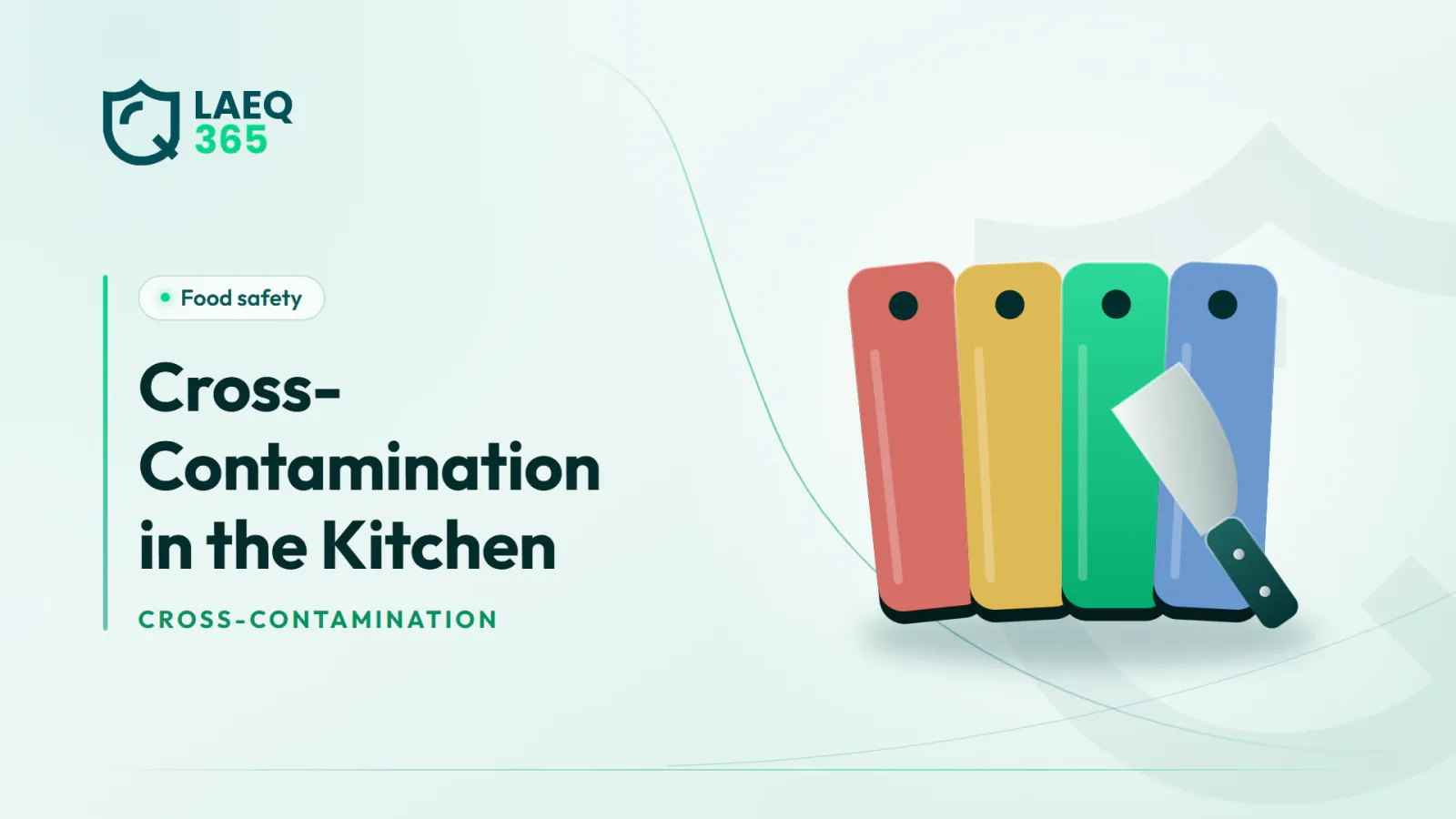
What is cross-contamination in the kitchen and how do you prevent it? Learn its types, cutting board colors, fridge order and a daily checklist.
Use-by and best-before dates explained for restaurants and food factories: what each date means, production dates, opened packs, expired stock and labeling.
Reheating food safely in restaurants: the target core temperature, how fast to reach it, the reheat-once rule, the right equipment and common mistakes.
What are the causes of food poisoning in restaurants? The key bacteria, the most common kitchen mistakes, and step-by-step prevention for your team.
Cold holding and salad bar safety for restaurants and buffets: target temperatures, display units, ice baths, sneeze guards and how to monitor and record.
A practical guide to hot holding food safety in restaurants and buffets: minimum temperatures, equipment, check intervals, time limits and discard rules.
Learn the food temperature danger zone (5–60°C), why bacteria multiply in it, and how time-temperature rules and daily logs keep your restaurant safe.

© 2026 All Rights Reserved