Cleaning vs sanitizing vs sterilizing explained simply: what each step does, when to use it, and the correct method for kitchen surfaces and food-contact tools.
1. Cleaning vs Sanitizing vs Sterilizing: What Is the Difference?
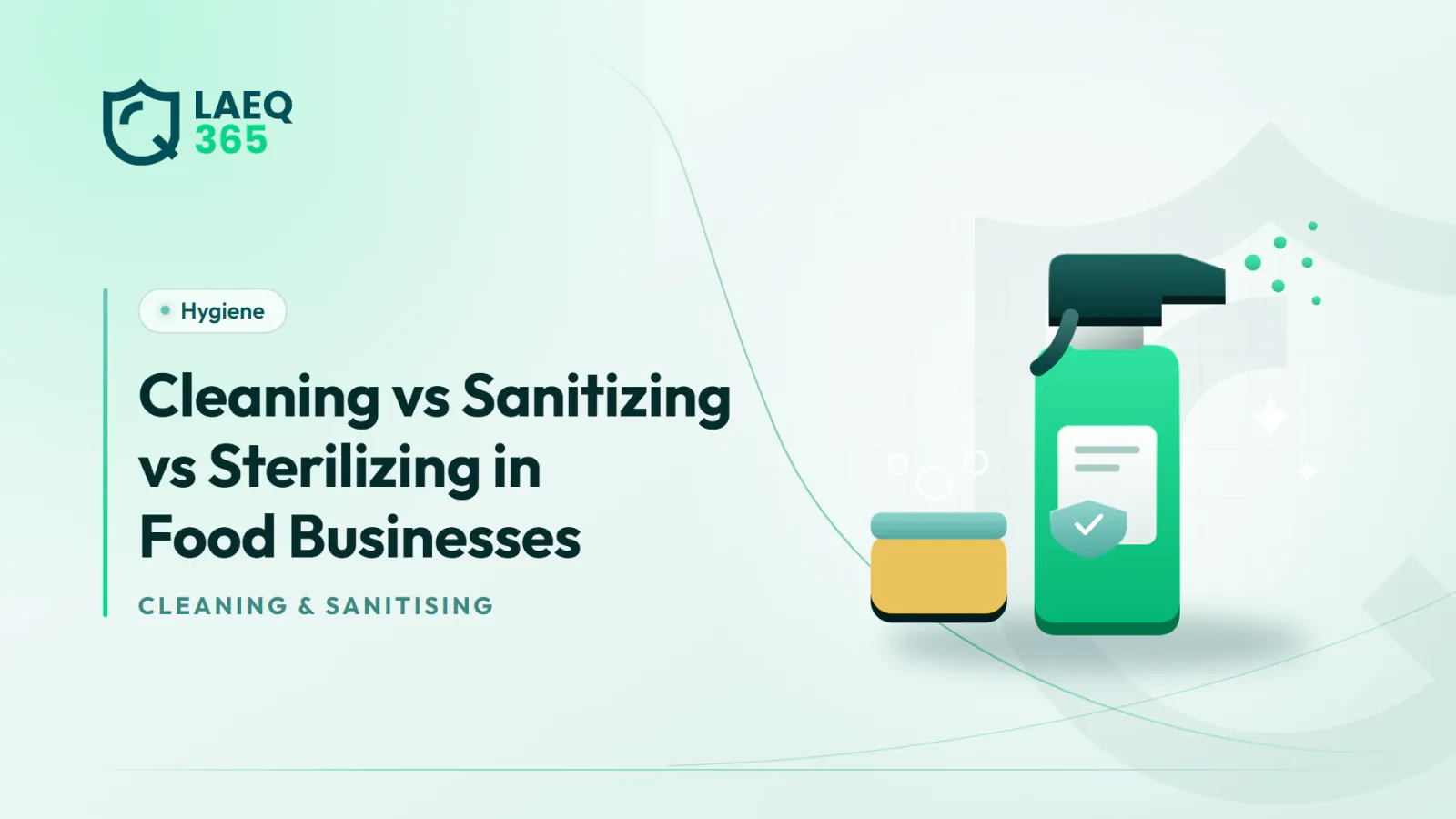
When it comes to cleaning vs sanitizing vs sterilizing, the difference comes down to the purpose of each process: cleaning removes visible dirt, grease and food residue; sanitizing reduces the number of microbes on an already clean surface to a safe level; and sterilizing, in its precise scientific sense, means destroying all forms of microbial life, a level used in hospitals, laboratories and some industrial processes far more than in kitchens.
In everyday use in Saudi restaurants, the words “sterilizing” and “sanitizing” are often used interchangeably, and what people call sterilizing is frequently what is scientifically known as sanitizing. The term itself matters less than understanding that there are two steps no kitchen can do without: cleaning first, then sanitizing.
The most common mistake is spraying sanitizer directly onto a dirty surface in the belief that it is enough. In reality, dirt and grease shield microbes and weaken the sanitizer, so the surface remains contaminated despite the strong smell of chemicals.
In this article we explain each concept in practical terms, when you need each step, and how to apply them to surfaces, utensils and equipment in your kitchen.
In short: always clean before you sanitize, choose a sanitizer suitable for food-contact surfaces, and follow the manufacturer's instructions on concentration and contact time.
2. What Is Cleaning and What Role Does It Play in Food Safety?
Cleaning is the removal of visible dirt such as grease, food residue, dust and stains from surfaces and utensils, using water, a detergent and mechanical effort such as scrubbing or scraping. Detergents break down grease and residue to make them easier to remove, but they usually do not kill microbes to a sufficient degree.
Cleaning matters because it is the foundation on which every other hygiene step is built. Without good cleaning:
- Food residue remains as food for bacteria, which then multiply.
- Thin layers of microbes form on surfaces and equipment that are hard to remove later.
- The sanitizer loses much of its effectiveness because it reacts with the dirt instead of the microbes.
- Insects and rodents are attracted to food residue and grease.
Specialists always remember four elements of effective cleaning: the right chemical, the right water temperature, mechanical effort through scrubbing, and enough time for the detergent to work. A weakness in one element must be compensated by another; for example, cold water requires more scrubbing.
In a working kitchen, this means: scrape off residue first, then wash with water and detergent while scrubbing, then rinse to remove the detergent before moving on to sanitizing.
Any lapse at this stage affects everything that follows, so never cut it short, however busy you are.
3. What Is Sanitizing and How Does It Differ From Cleaning?
Sanitizing is reducing the number of microbes on a previously cleaned surface to a safe level that poses no risk to food safety. It is done either with chemical sanitizers approved for use in food establishments, or with heat, such as very hot water or steam in commercial dishwashers.
The essential difference is that cleaning deals with what the eye can see, while sanitizing deals with what it cannot. A cutting board that looks shiny after washing may still carry bacteria from raw chicken, and sanitizing is what makes it safe for cutting vegetables afterward.
For sanitizing to be effective, pay attention to three things:
- The right concentration: An over-diluted sanitizer does not kill microbes, and an over-concentrated one can leave harmful residue on food-contact surfaces. Follow the manufacturer's instructions precisely.
- Contact time: Every sanitizer has a period it must remain on the surface before being wiped or rinsed off, usually stated on the label.
- A surface cleaned beforehand: As explained, sanitizer does not work well on top of dirt.
Some products combine cleaning and sanitizing in one step, but they usually need to be applied twice: once to clean and again to sanitize. Always read the label, and see our guide to cleaning chemicals in restaurants.
4. What Does True Sterilizing Mean, and Do Restaurants Need It?
Sterilizing in the scientific sense is the complete destruction of all microorganisms, including resistant spores, using methods such as pressurized steam in an autoclave or certain specialized industrial treatments. This level is required for surgical instruments and laboratories, and in some food manufacturing processes such as canned foods, which undergo tightly controlled heat treatment.
In a typical commercial kitchen, however, it is neither realistic nor necessary to fully sterilize surfaces and utensils. The right goal is good cleaning followed by effective sanitizing that brings microbes down to a safe level.
Why does this distinction matter to you? Because mixing up the terms can lead to wrong decisions, such as:
- Buying a product marketed as one that “sterilizes” without checking that it is suitable for food-contact surfaces.
- Believing that a single spray is enough to make a surface “sterile” without cleaning it.
- Writing vague procedures that each worker understands differently.
Our advice is to use only two clear terms in your written procedures, “cleaning” and “sanitizing”, specifying the product name, concentration and contact time for each surface. This removes confusion and makes training easier for a multinational team.
5. What Are the Correct Cleaning and Sanitizing Steps for Kitchen Surfaces?
This is a widely adopted method for cleaning and sanitizing work surfaces, boards and utensils that come into contact with food, and it can be posted as a card at each station:
- Pre-clean: Scrape off food residue and dispose of it in the trash bin.
- Wash: Clean the surface with warm water and detergent, scrubbing well until grease and stains are gone.
- Rinse: Remove the detergent with clean water, as its residue can weaken some sanitizers.
- Sanitize: Apply the approved sanitizer at the correct concentration and leave it for the contact time stated on the label.
- Final rinse if needed: Some sanitizers require rinsing after the contact time and some do not, depending on the manufacturer's instructions.
- Air-dry: Leave utensils to air-dry on clean racks and avoid wiping them with a cloth towel.
For portable items such as plates and small utensils, the same steps can be applied using the three-sink system, or in a commercial dishwasher that sanitizes with heat or chemicals. We explain this in detail in our guide to commercial kitchen equipment cleaning.
Remember to use different cleaning tools for different areas: a sponge used in the restrooms never enters the kitchen.
When dealing with suppliers, ask for a written explanation of what each product means by “sterilizing” or “sanitizing”, and how it should be used on food-contact surfaces.
6. When Do You Clean and When Do You Sanitize in the Kitchen?
Not every surface needs the same level of treatment. Distinguishing between them saves time and materials and focuses effort where the risk is highest:
Surfaces that need cleaning and sanitizing are everything that touches food directly or is frequently touched by hands:
- Cutting boards, knives and preparation surfaces.
- Mixing bowls, serving utensils and spoons.
- Scales, can openers and meat slicers.
- Fridge and door handles, and taps.
These surfaces are sanitized after each task is finished, when moving from raw to ready-to-eat foods, and at regular intervals during continuous use.
Surfaces where regular cleaning is usually enough are those that do not touch food directly:
- Floors, walls and ceilings.
- The outer shelving in storerooms.
- Light covers and hood filters, on their own periodic schedule.
Even so, some of these surfaces may need sanitizing in certain situations, such as floors after a spill of raw meat juices or after a vomiting incident. Put these rules into your restaurant kitchen cleaning schedule so every worker knows what to clean, when and how.
If it is unclear whether a particular surface needs sanitizing, ask yourself: Does it touch food, or hands that touch food? If the answer is yes, treat it as a critical surface.
7. How Do You Verify That Cleaning and Sanitizing Were Done Correctly?
Verification is what turns cleaning from work that is assumed to have been done into work that is proven. These are practical methods any restaurant can apply:
- Visual inspection: After cleaning, no grease, residue or odors should remain. Run your gloved hand over hidden surfaces such as the undersides of tables and equipment edges.
- Sanitizer concentration test strips: Simple strips are available that measure the concentration of some types of sanitizer in solution, helping you confirm the dilution is correct.
- Cleaning records: Every cleaning task is signed by the person who did it and the person who verified it, with the time and date.
- Supervisor rounds: A short round after the shift closes to check critical areas.
- Advanced verification tools: Some larger establishments such as factories and central kitchens use rapid tests that detect organic residue on surfaces, or swabs sent to a laboratory as part of a periodic verification program.
When you notice a problem recurring on a particular surface, don't just clean it again; look for the cause: Is the product unsuitable? Is the concentration wrong? Was the worker not trained? This corrective thinking is at the heart of any food safety system, and you'll find more about it in our food safety articles.
Conclusion
The difference between cleaning, sanitizing and sterilizing is not a matter of wording but the basis of sound hygiene procedures: cleaning removes dirt, sanitizing reduces microbes to a safe level, and full sterilization is rarely needed in restaurants. Always apply the sequence: remove residue, wash with detergent, rinse, sanitize at the correct concentration and contact time, then air-dry, with regular verification. When you document these steps in digital checklists in LAEQ365, every worker knows their task, the supervisor sees what has been done and what is overdue, and the records are ready for any inspection visit.
Frequently asked questions
- Are sterilizing and sanitizing the same thing?
Scientifically, no: sanitizing reduces microbes to a safe level, while sterilizing destroys all microorganisms, including spores. In everyday restaurant use, however, the word “sterilizing” is often used to mean sanitizing. In a commercial kitchen the practical goal is cleaning followed by sanitizing, while full sterilization is used in laboratories, hospitals and some industrial processes.
- Can you sanitize without cleaning first?
It is not recommended, because dirt, grease and food residue shield microbes and react with the sanitizer, reducing its effectiveness. Always remove residue, wash with detergent and rinse, then apply the sanitizer at the correct concentration and contact time. Some products combine both functions, but they usually need to be applied twice according to the manufacturer's instructions.
- How often should kitchen work surfaces be sanitized?
Food-contact work surfaces are sanitized after each preparation task, when moving from raw to ready-to-eat foods, at regular intervals during continuous use throughout the shift, and at the end of the day after full cleaning. It is best to set these times in writing in the cleaning schedule so they are not left to each worker's judgment.
- Is hot water enough to sanitize?
Hot water can sanitize at high enough temperatures for a sufficient time, as happens in commercial dishwashers designed for this purpose. But hot water from an ordinary tap usually does not reach the required temperature, and hands cannot tolerate water at those temperatures. That is why most kitchens rely on an approved chemical sanitizer for surfaces and on high-temperature dishwashers for utensils.
- What is the best sanitizer for restaurant kitchen surfaces?
There is no single best sanitizer for everyone; the choice depends on the type of surface and how it is used. What matters is that the product is approved for use on food-contact surfaces, registered with the competent authorities, and used according to the dilution, contact time and rinsing instructions on the label. Consult your cleaning chemicals supplier and ask for a safety data sheet for each product.